Race-day field note
A Heat Plan for a Summer Night at the Short Track
Published August 29, 2026
The safest recovery stop is the one the crew places on the pit map before the first hot lap: real shade, reachable water and one clear decision-maker.
A hot short-track night does not begin when the driver feels thirsty. It begins while the pit area is still being laid out, when the crew can decide where cool water, real shade and a recovery seat will be during every turnaround. The car gets a fuel and tyre plan; the people working beside it need a heat plan that is just as visible.
OSHA's Water, Rest and Shade guidance puts the essentials in practical terms: cool drinking water should be close to the work, rest should increase as heat stress rises, and the recovery place should actually be cooler. For a race team, that means the bottle crate and shaded seat belong in the working pit layout, not across the paddock behind trailers and hot equipment.
This is not a universal medical formula or a replacement for event rules. Weather, humidity, protective clothing, the length of a run and the physical work in the pit all change the load. The useful plan names one person who watches conditions, keeps the recovery area ready and has the authority to stop the next run when a driver or crew member is not recovering normally.
Read the whole pit area, not only the air temperature
The thermometer in a weather app is only one piece of the scene. The National Weather Service heat-safety page explains that heat index combines temperature and relative humidity, while Wet Bulb Globe Temperature also accounts for factors such as wind and solar radiation. That distinction matters at a paved oval, where a shaded spot, an open pit lane and the sun-facing side of a dark race car can feel like different workplaces within a few yards.
Before the gate opens, note the forecast, direct sun, airflow and the time when the pit surface usually holds the most heat. Then look at the actual work. A driver is enclosed by a suit, seat and cockpit. Crew members may be lifting tyres, leaning over hot bodywork or waiting in sun that moved since the canopy was first placed. The heat plan follows those tasks instead of assuming everyone shares the same exposure.
A useful pit board does not need a complicated score. It needs the expected hot period, the planned recovery place, the water supply owner and the person who makes the stop decision. Review it when a delay extends the event or when the sun angle moves the working area out of shade. A plan written at noon may be wrong by the second feature.
Put shade and water in the path of the work
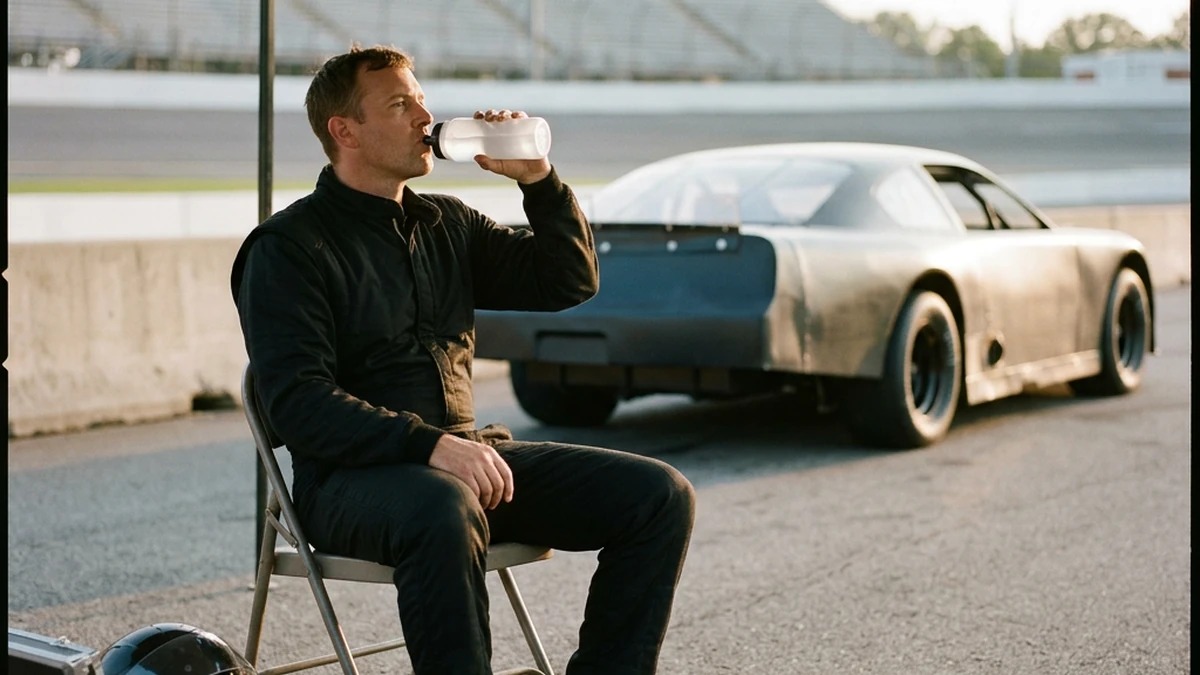
The recovery area should be close enough that using it is the easiest choice. The image on this page shows the intended action: a driver is fully inside canopy shade, seated away from the hot car and drinking from a personal bottle before the next decision. The car remains parked behind him; recovery is not treated as one more job performed while leaning into the cockpit.
NIOSH's workplace recommendations call for cool potable water near the work area, recovery time in a cool place and a buddy system that helps people notice signs in one another. Translate that to the pit by assigning bottles to individuals, keeping the cooler accessible and asking a named teammate to check the driver and the busiest crew members after each run.
Do not bury the drinking water under spare parts or place the chair where exhaust, a generator or direct afternoon sun defeats the purpose. Keep the walking path clear, separate the recovery zone from refuelling and hot mechanical work, and restock before a shortage becomes a reason to skip a break. The canopy is useful only while its shadow still covers the person using it.
Build driver recovery into the turnaround
When the car stops, the first minute can become a rush of pressures, temperatures and setup notes. The driver still needs a predictable exit. Once the car is secure and the crew member responsible for release gives the signal, the driver can remove the helmet, reach the shaded seat and begin the planned drink-and-observe period shown in the photograph. Another crew member can collect the debrief rather than making the driver stand beside the hot car.
Recovery should be a real interval, not a photo opportunity between tasks. Check whether speech, attention, balance and behaviour look normal for that person. Ask a simple, direct question and listen to the answer instead of accepting an automatic thumbs-up. A driver who is still hot and distracted may minimise a problem because the next run is approaching.
The same principle applies to the crew. Rotate the most physical jobs when possible, use the shaded seat before someone is struggling, and give a returning or newly assigned person time to adjust to hot conditions. NIOSH advises gradual acclimatization rather than assuming previous fitness or racing experience makes a person immediately ready for a hotter environment.
Treat symptoms as a stop signal, not setup noise
The calm, alert posture in the image is the baseline the buddy check is looking for. A person who becomes confused, unusually irritable, faint, weak or unsteady is not giving the team a minor comfort complaint. CDC/NIOSH lists the signs of heat-related illnesses and gives first-aid actions, including emergency care for possible heat stroke. The event's medical response plan takes priority over the race schedule.
If a driver or crew member is not recovering normally, stop their work, move them to the cooler place and follow the venue's medical procedure. Do not send someone back into the car simply because a lap is about to be lost. Confusion, loss of consciousness or other signs of heat stroke require emergency action, not another bottle and a wait-and-see lap.
Record what changed: the time, weather, task, clothing, symptoms and response. That note helps the team correct a failed plan, whether the shade moved, water was too far away, the workload was concentrated on one person or a delay extended exposure. It also gives the next event crew something more useful than the phrase "it was a hot night."
A short-track heat plan works when it changes what the team does before anyone feels ill. Put the shaded recovery point on the pit map, keep water in the working path, assign the buddy check and give the stop decision a name. Those habits belong beside the track's rules, the event schedule and the rest of the useful articles archive: preparation is part of racing, not an interruption to it.